

Once you start learning a little more about yoga, you’ll find out that it is way more than a physical exercise. It is a thousand-year-old system to help you live a fuller, better life.
To do that, yoga employs 8 different pathways to get you closer to “oneness”. These 8 “limbs of yoga” were collected by the sage Patanjali in his “Yoga sutras”.
These texts are many hundred years old, however, and have been written in Sanskrit. Not ideal for us to learn about his idea. And then they deal with quite philosophical topics, making it even harder to really grasp the concepts.
To make this important part of yoga philosophy a little more accessible, I’m going to explain the eight limbs of yoga in plain, simple English. Once you’ve read through this, you’ll have a much better idea of what the “8-fold-path of yoga” is all about.
1. Yamas: What not to do

The Yamas make up the first limb. They basically tell you what not to do. Patanjali lists 5 Yamas in his writing:
- Ahimsa: Don’t be violent and don’t harm any other living creature.
- Satya: Don’t lie.
- Asteya: Don’t steal.
- Brahmacharya: No philandering or unfaithfulness. Also interpreted to mean celibacy.
- Aparigraha: Don’t be greedy.
2. Niyamas: What to do
The 5 Niyamas tell you which concepts to strive for:
- Shaucha: Be clean or pure, both physically, and also mentally.
- Santosha: Be content and accepting.
- Tapas: Show self-discipline and perseverance.
- Svadhyaya: Keep learning, both about yourself and spiritual things.
- Ishvarapranidhana: Surrender to a higher power.
3. Asana: The workout

Asana means posture or seat. Originally, this referred specifically to the meditation postures. To be yogic, these postures would need to not cause any discomfort or fidgeting. The idea behind this was to allow for meditation without your body getting in the way.
Today, when we talk about Asanas, we mean all the yoga postures. Basically, the physical practice of Yoga. This limb is what most people today mean when they talk about Yoga.
Related: Get it straight: 7 Yoga poses to improve your posture
4. Pranayama: Breathing exercises
Pranayama means all kinds of breathwork. Literally, it would translate to something like “control of breath”.

By using different types of breathing techniques, you can influence your mental and physical state. There are breathing exercises for calming down, and there are also some for making you feel more energized.
5. Pratyahara: Withdrawing your senses
So far, most things have been quite easy to explain. Pratyahara is the first limb to challenge that a little bit. It trains you to “withdraw your senses from the outside world”.
But what does that mean?
The way I understand it, it means to not let the things that your senses can detect control you. So while you’ll still hear the dog barking downstairs, for example, it won’t distract you. In a way, it is becoming less responsive to the stimuli around you.
6. Dharana: Focus
Dharana takes it one step further. Here, you’ll train your ability to focus. This could be anything you choose: your breath, a mantra, some object…
The point is to be able to focus your concentration on that one thing.
7. Dhyana: Meditation
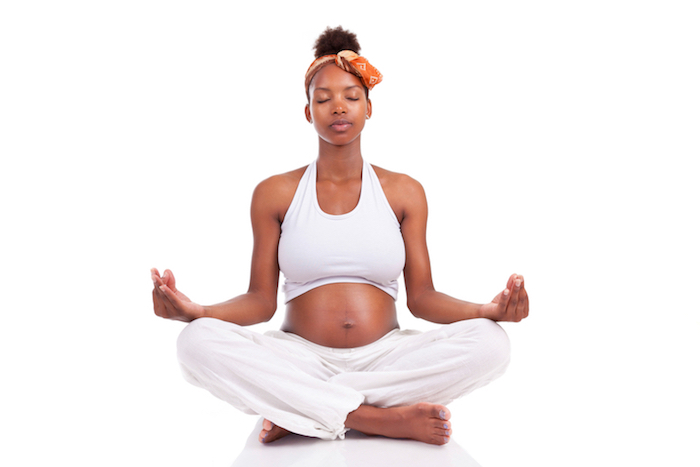
Are you a little surprised that the next limb is meditation? Both of the two limbs before already kind of sounded like meditation, didn’t they?
But Dhyana takes it one step further: it is about observing the thing we’re focussing on. Without judgement, just observation.
So first we need to learn to not get distracted by sensations (limb 5). Then we train our ability to focus on limb 6. And then we are able to really observe. Nothing left to interrupt.
8. Samadhi: Oneness
Samadhi, again, is not easy to put into simple words. Let me try though:
If refers to the state where you are so absorbed in your meditation that you forget about yourself. Or your self. This way, it is as if you and the thing or topic you are meditating on are one.
Basically, the perfect flow state!
Patanjali makes clear that this is not a permanent state for most people. To achieve that, you would need to let go of all the things that make you you: likes, dislikes, habits, and so on.
8 limbs of yoga: FAQ
I hope these explanations helped you better understand what the 8 limbs of Yoga are all about. To finish things off, I want to answer a few common questions about them:
Where do the 8 limbs of Yoga come from?
The 8 limbs of Yoga come from the “Yoga Sutras”. They are a collection of knowledge about classical yoga and were written sometime between 500 BCE and 400 CE.
Who wrote the 8 limbs of Yoga?
As part of his Yoga Sutras, the 8 limbs were written down by the sage Patanjali. He either was a very productive author, or there were several writers by the same name. Either way, lots of Sanskrit writing has been written by (a) Patanjali.
What is the purpose of the 8 limbs of Yoga?
The 8 limbs of Yoga classify the steps it takes for a person to reach enlightenment or liberation. They start with steps to change your interactions with the outside world. Then they go on to change your inner world.
How do I memorise the 8 limbs of yoga?
To help you memorize the 8 limbs, first remember that the first 4 deal with the outside world, then there is a “transitional one”, and then there are three “inside world” limbs. Categorizing like this will help you remember their exact contents better.
Once you’ve got those limbs down, move on to memorize the Yamas and Niyamas.
You can also use the image below to help you remember the 8 limbs better. Click it to access the 8 limbs of yoga printable in a new tab!

How do I practice the 8 limbs of yoga?
To practice the 8 limbs of yoga, you can first start by defining for yourself what the Yamas and Niyamas could look like in your daily life. How can you be more truthful? Less harmful to yourself and others? Find those answers for yourself.
And then make them actionable. Put little reminders in your calendar. Or schedule a daily time to reflect on your behaviors.
I’ve found that it can help to work on one of the concepts at a time. Then, when it’s become almost second nature, moving on to the next one.
Share this!
I hope you’ve learned something useful from this article. If you did, please share it with someone!

Hi, I’m Leo, the Yogi behind Yogabullet. I’ve been practicing Yoga for over 10 years now.
My goal with this blog is to show people how Yoga can help anyone, no matter how fit they are, to love their body and their life more.
I’ve experienced the life-changing power of Yoga myself and made it my mission to share this with as many people as possible.
I am a Registered Yoga Teacher (RYT) with Yoga Alliance, which acknowledges the completion of a yoga teacher training with a Registered Yoga School (RYS).