
When you’re new to the yoga world you’ll notice quite a few peculiar things and habits of the people around you. Especially if you’ve come to yoga as a workout, for example, for losing weight. In that case you might not know a lot about the origins of yoga and the philosophy behind it.
Related: The 8 limbs of Yoga explained in easy terms (+free printable)

One of the things you’ll notice pretty quickly is the frequent usage of the word “namasté”.
Most yoga teachers end their classes by putting their hands together, bowing their head and saying that ominous word.
Naturally, you might be wondering: Why do they do this? Why do they say namasté and what is the correct response? And what does it even mean?
So I’m gonna demystify a few of these things for you here.
What does it mean to say namaste?
So why do yoga teachers say “namasté” if it’s an Indian greeting?
This is due to yoga having its origins in India but also due to the more spiritual meaning of the word namasté. So let’s dive into that a little bit.
What is the spiritual meaning of namaste?
The word namasté expresses the belief that everyone has some light or spirit in themselves. Greeting this means that we honor it, we acknowledge it and we bow to it.
How to respond when someone says namaste?
So what do you say when someone says namasté to you?
If it makes you uncomfortable in any way, obviously you don’t have to respond to the greeting at all.
But the traditional classic response would just be to do exactly the same. Press your hands together in front of your heart and say namasté while bowing your head.
How do you pronounce namaste?
Seeing as the word is clearly not an English one, most people wonder how to pronounce namasté.
Let’s make it easy for you: Namasté is pronounced like “nah-mah-stay”. This led to the development of quite a few word plays and namasté memes.
Probably the most famous one is the sentence “namastay in bed”, meaning that the person simply doesn’t want to get up.
Are om and namasté the same?
As a yoga beginner all these strange-sounding words and syllables might be confusing. But they actually do mean different things. As we just learned, namasté is a form of greeting, while om is a syllable used for chanting. It also has a different, pretty complex meaning.
Related: Which type of Yoga is best for you?
Did that clear things up a little?
Hopefully, now it’s become a little clearer why yogis use this particular type of greeting.
I know how overwhelming all the yogic vocabulary and customs can be when you’re just starting out as a yoga beginner. But usually, there is something pretty meaningful behind.
As usual: why don’t you share this with someone? Happy practicing!

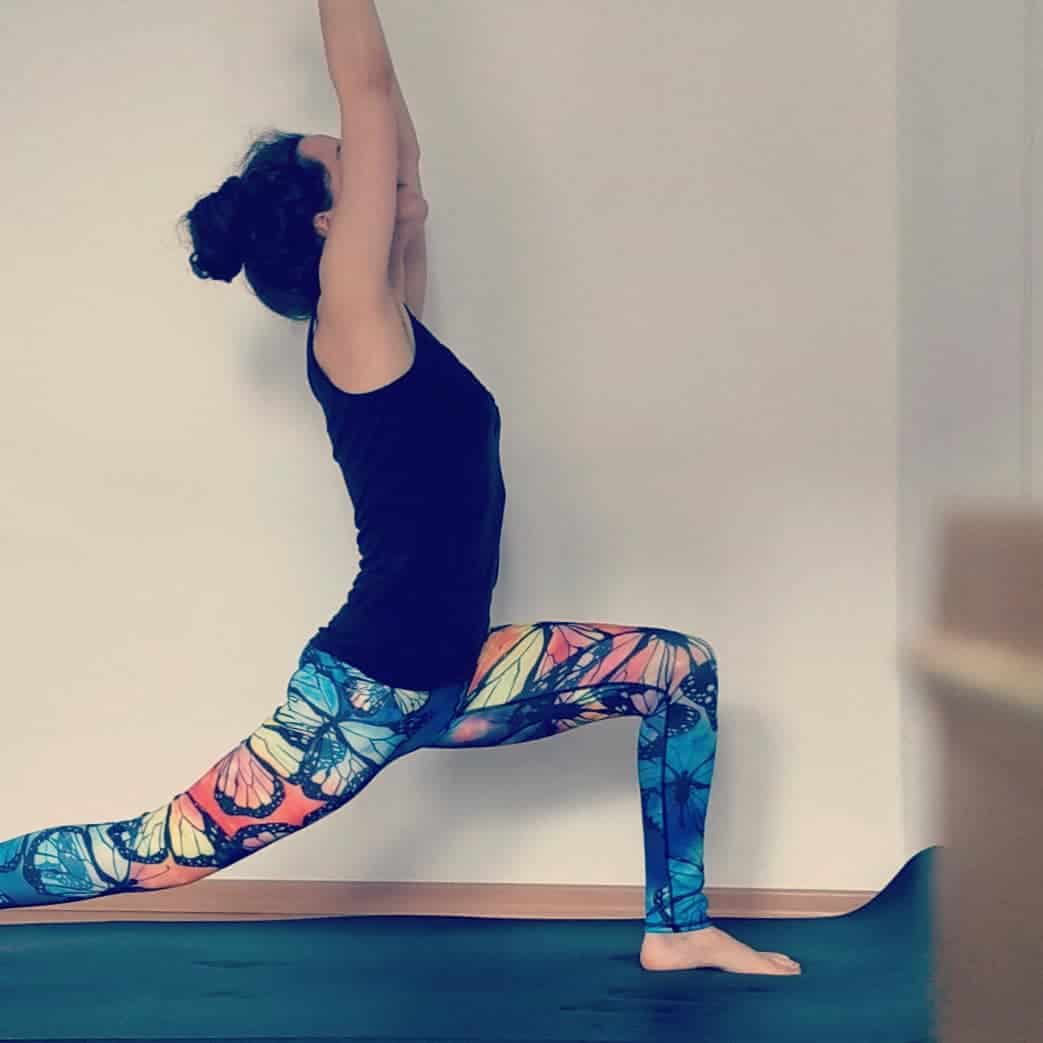
Hi, I’m Leo, the Yogi behind Yogabullet. I’ve been practicing Yoga for over 10 years now.
My goal with this blog is to show people how Yoga can help anyone, no matter how fit they are, to love their body and their life more.
I’ve experienced the life-changing power of Yoga myself and made it my mission to share this with as many people as possible.
I am a Registered Yoga Teacher (RYT) with Yoga Alliance, which acknowledges the completion of a yoga teacher training with a Registered Yoga School (RYS).